When Everything Changed…
Graham Daugherty • September 23, 2019

by Jennifer Hess, Alex’s mom
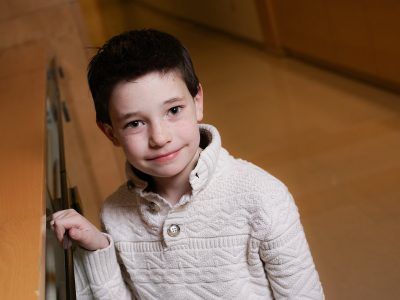
This picture is from 9 years ago. We were hiking and my 4 yr old was pretending to be a bear. You may not even see it, but he is very sick in this picture. Don’t worry, John and I couldn’t see it 7 yrs ago either. As one can say, hindsight is 20/20. This perfect little boy was still “normal,” like all little boys. He never had to worry. I never had to worry. John never had to worry. We slept at night.
Today, my 11 yr old son has lived over half of his life with a disease that there is still no cure for, only a way to manage it. Seven years ago, on September 23, 2010 to be exact, my friend Monica convinced me to take Alex to the doctor (to confirm what we suspected). I will never forget that day. Alex was four years old. It was 4:00 in the afternoon and I called Alex’s pediatrician. Somehow, I got the last appointment for the day. The doctor came in and I was playing it off like there was nothing wrong, “Alex has been drinking a lot, peeing all the time. We can’t even go to the grocery store without him going to the bathroom a couple of times. I think he may have strep throat” I told her.
The doctor decided to test his urine to see if he was spilling sugar. While we were waiting for this result the doctor was playing in the hallways with Alex. They were chasing the train on the wall, giggling about things. She said he was “spilling sugar and that they should test his blood sugar.” She poked his finger, it read 364 (I had no idea what this meant at the time). As soon as she read the number, she threw the blood glucose meter down and it shattered, we both burst into tears (because she didn’t have to say a word, I knew and she knew I knew). The doctor told me you need to get to Children’s Hospital ER right away. She told me she was going to call an ambulance. I told her I wanted to drive him; the ambulance would scare him. I begged her to please let me drive him. I really just wanted to go home and get Alex’s blanket and teddy – but I didn’t tell her that. Somehow, I was able to convince her to let me drive him to the ER. She said the cops will be at my house if I am not at Children’s Hospital within the hour. John made that 45-minute drive during rush hour in less than 20 minutes.
Upon arriving at Children’s Hospital, we were whisked into a room with doctors and nurses coming in and out. The waiting. The not knowing what exactly is going on. The ER can be a very lonely place when you are scared. Me telling the doctors there that I gave him an Icee and a cookie around 3 — it’s my fault; I’m a bad mom. I fed him crap and that’s why his sugar is high five hours later. Apologizing saying I will only give him vegetables for snacks from now on. The ER docs telling me I am a good mom and that was not it. Being thankful he was not DKA. The confirmation that it is type 1 diabetes, the insulin, feeling “shell shocked,” The Barbara Davis Center the following morning.
The next morning, we met a new friend, Lori, at the BDC whose daughter (also Alex’s age) was going through the exact same thing that day. It is funny how all of a sudden you are drawn to people who are in the same situation as you are. You become instant friends. You are now in this club that you really don’t want to belong to, but you do, and you are going to make the best of it. The next days were a whirlwind of learning how to draw insulin, test blood sugars, carb count, learn what everything means.
We are constantly learning how to manage his diabetes – because it changes daily, it always will. I am so thankful for insulin and so thankful my friends who wanted to learn how to help manage Alex’s diabetes so he could be a “normal” boy and have playdates. So thankful for the doctors, nurses and all of the staff at the Barbara Davis Center which made this so much easier for us. Each and every one of them care about Alex, they care about our family. They really want us to be successful in managing this disease. Eventually, a new normal sets in, but every time you a see a newly diagnosed family with that shell shocked look in their eyes it all comes rolling back. All you can do is nod and tell them it will be okay with that same look that we got when we were diagnosed. You know they are in good hands at the BDC and it will be okay.
You know, the thing I find funny and a bit ironic is if you ask Alex if he hopes they find a cure for diabetes he’ll tell you no. He likes to tell me, “Mom, I love having diabetes. It makes me more special.” But, as all moms do, I hope that one day soon I can say to Alex, “They found a cure!”