How to Handle Halloween with Type 1 Diabetes

Graham Daugherty • October 25, 2017

By Jennifer Griffin

It’s October and as the weather changes thoughts turn to Halloween. Whether it’s your first year or your fifteenth the massive quantities of candy, treats and not to mention the extra exercise of Trick or treating can be daunting for any T1D parent.

First, let me say that I will never judge another family for how they handle diabetes. This condition is big enough without us turning on each other. However, since our family has had this particular adventure for 12 years here are a few of my tips.

Two ghosts and a pumpkin are on a halloween sign

My DD was 2 when we were diagnosed, so it was really easy to let her go to 15 houses for trick or treating, take some pictures, give her one candy and then mysteriously make it disappear. We saved the candy for emergency lows (and mom’s energy after a long night) and moved on to Thanksgiving.

As my daughter grew we had to come up with a way to “get rid of” most of the candy without her feeling deprived. Out of this, the Halloween Fairy was born. I realize since then someone has created a “Sugar Goblin” similar to the Elf on the Shelf, but this isn’t nearly as much work. The Halloween Fairy takes some of the candy collected for trick or treating and leaves a toy instead. The more they give up, the better the toy. This works for non-T1D kids too, leaving even more candy for the “emergency stash”.


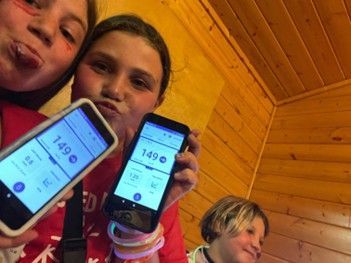
It’s hard at these times to have your kiddo see their friends digging into large piles of candy and eating whatever they want, so be sure to be ready with carb counts and insulin. Same with the school Halloween party. If your kiddo is old enough discuss what treats might be there and strategies for making good choices. Send a baggie to bring extra treats home and make sure the teacher understands your plan. This is where a pump comes in handy verses multiple injections, but just correcting after works too. Remember that candy carbs burn hot and fast. Our first few years we actually had rebound lows. Increasing a temp basal rate will allow them to graze during Trick or Treating and setting a timer to stop and check their blood glucaose every 30 minutes allows you to gage how they’re doing.

Allowing your kid to have some treats will let them feel like their peers, while setting limits helps them understand the importance of balance. Really, that’s an important lesson for anyone because no one needs to eat the entire bowl of candy in one night.

Which brings me to my final point: It’s just one night. So often we get tunnel vision on “in range” that we forget that our kids have diabetes, diabetes doesn’t have them. Ok, so it’s not ideal to pop up into the 250’s, but it won’t hurt them if it happens one night and you correct after bedtime.

So for all the sugar monsters out there – run, have fun, eat Reese’s because they’re high in protein too, share with mom and dad because they deserve it and Happy Halloween!
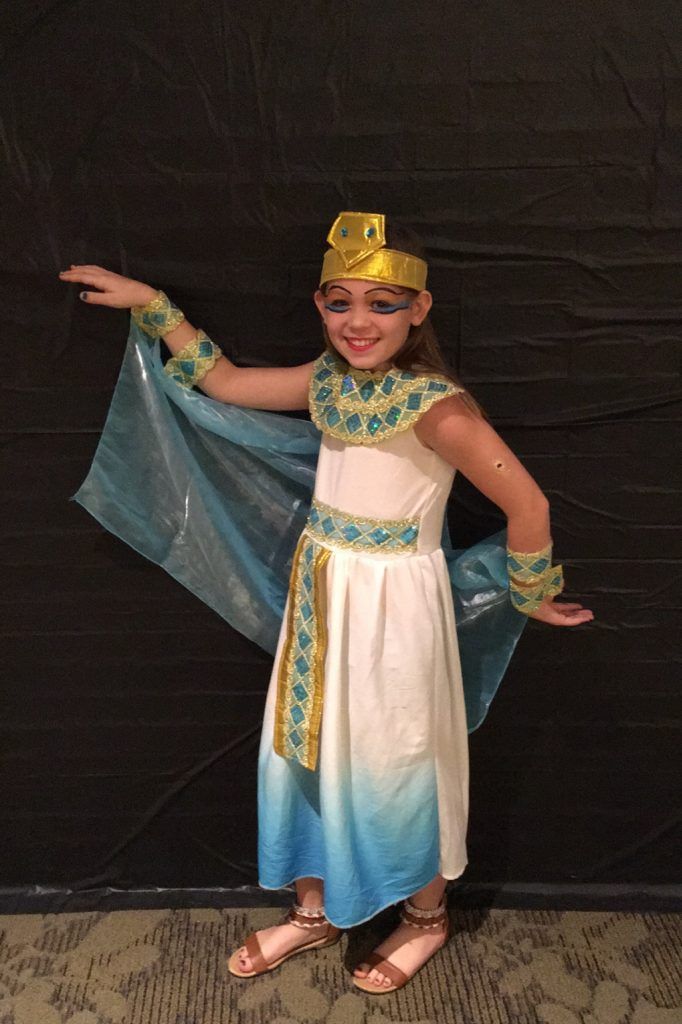

A little girl in a costume of a pharaoh is standing in front of a black wall.
A woman is doing a split with the words if i can just inspire one person
By Sasha Amiscaray April 15, 2026
TL;DR After 15 years of living with type 1 diabetes, Sasha shares her journey from diagnosis and denial to acceptance, advocacy, and a career in healthcare. Through challenges like fear of injections, managing diabetes as an athlete, and navigating school and college, she discovered strength, community, and purpose. Her story shows that while diabetes is difficult, it can also shape identity, open doors, and lead to meaningful connections and opportunities.
A black and white photo of a person with an insulin pump on their stomach
By Dr. Holly O'Donnell April 3, 2026
Type 1 diabetes affects mental health in youth and families. Learn about risks like depression, anxiety, and distress, plus support options and when to seek help.
A young boy in a white sweater is standing next to a cabinet.
By R. Paul Wadwa, MD, Professor of Pediatrics at the BDC April 2, 2026
Type 1 diabetes is often misdiagnosed as flu, UTI, or viral illness. Learn key symptoms, DKA warning signs, and when to ask your doctor for testing to avoid delays.
Author and type 1  diabetic Madeline in a research lab
By Madeline VanOrman March 20, 2026
Follow one patient’s journey with type 1 diabetes from childhood diagnosis to college life, sharing challenges, independence, and finding support along the way.
A cartoon illustration of a white monster with horns waving.
By Cheryl Lebsock March 18, 2026
A parent shares how naming type 1 diabetes “Frank” and reframing it helped protect their child’s identity, improve mental health, and strengthen family support.
Three young type 1 girls with CGMs on their arms.
By CDF Staff March 18, 2026
Donate your Colorado state tax refund to the Children’s Diabetes Foundation. Learn how to use form DR 0104CH to support T1D patients and families.
Young girl with her blood glucose monitor and insulin pump
By Hali Broncucia, Research Scientist at the Barbara Davis Center for Diabetes March 16, 2026
Learn the three stages of type 1 diabetes and why early screening matters, including how detection can reduce DKA risk and delay onset with new therapies.
A group of people are posing for a picture in a living room.
By Stacy Robinson June 14, 2024
With Father’s Day just around the corner, I am thinking about my dad even more than I usually do. He was a special man who lived a remarkable, impactful life right up until the day he passed away at the age of 98, a little over a year and a half ago. He was a decorated World War II veteran, a bookie in Vegas during the Rat Pack era who married the love of his life between rounds of a prize fight, and who later went on to become a successful entrepreneur. Most importantly though, he was a devoted husband, father and grandfather.
A man and a woman are posing for a picture in a parking lot.
By Lindsay Klatt June 14, 2024
Author: Lindsay Klatt Being the dad of two daughters already has its highs and lows; having one of them (who admittedly was already a little feisty) diagnosed with type 1 diabetes makes him a saint. My wonderful dad navigated these challenges with such love and grace. As we approach Father’s Day and as I recently celebrated my 27th Diaversary, I reflect on the things he deserves to be thanked for. There are too many to count and no way to properly express gratitude for the additional struggles type 1 fathers face, but here’s a toast to a few of the things etched on my heart: Cheers to my dad who, when I was diagnosed, had the best balance of acknowledging the sadness of the event and being encouraging for the future. It made me feel seen to see him upset, and to see him determined. He has always maintained that balance I am so grateful for.