Happy Hearts and T1D

Graham Daugherty • February 5, 2020

A sign that says happy hearts and t1d on it

According to a Harvard-led study published in the American Heart Association’s journal Circulation, keeping type 1 diabetes under tight control through medication and monitoring may help prevent an immune reaction that attacks the heart.

Dr. Myra Lipes, the study’s senior author and an investigator at Harvard Medical School’s Joslin Diabetes Center in Boston, and other researchers looked at data from a broad clinical trial involving type 1 diabetes patients who were randomly split into two groups.

People in one group tightly controlled their blood sugar levels with intensive insulin treatment and frequent glucose monitoring, while those in the other were looser with their regulation and had higher blood sugars. At the start of the experiment, participants were free of heart disease and had regular blood pressure and cholesterol levels.

The researchers found that people exposed to higher blood sugar levels were more likely to develop an autoimmune response to the heart proteins that was linked to later development of heart disease, including calcium buildup in heart arteries, heart attack, bypass surgery and death.

“It wasn’t something in the blood itself that triggered this reaction,” Lipes said. “It’s that the high glucose levels injure the heart muscle tissue, and we postulate that the immune system of people with type 1 diabetes overreacts to this heart injury.”

People with type 1 diabetes have a higher risk of developing heart disease than the general population, but the reason why hasn’t been clearly understood. In fact, people with both types of diabetes are known to be at higher risk for heart disease, just for different reasons.

The study points out that the difference for patients with type 1 diabetes may stem from the creation of antibodies that attack the heart, said endocrinologist Dr. Robert H. Eckel, a professor of medicine at the University of Colorado.

“They don’t occur in everybody, but the control of the diabetes relates to the formation of these antibodies against heart proteins,” said Eckel, who was not involved in the study. “In type 2 diabetes, you just don’t see these antibodies being developed.” The study stresses the importance for patients with type 1 diabetes to keep their condition under control, he said.
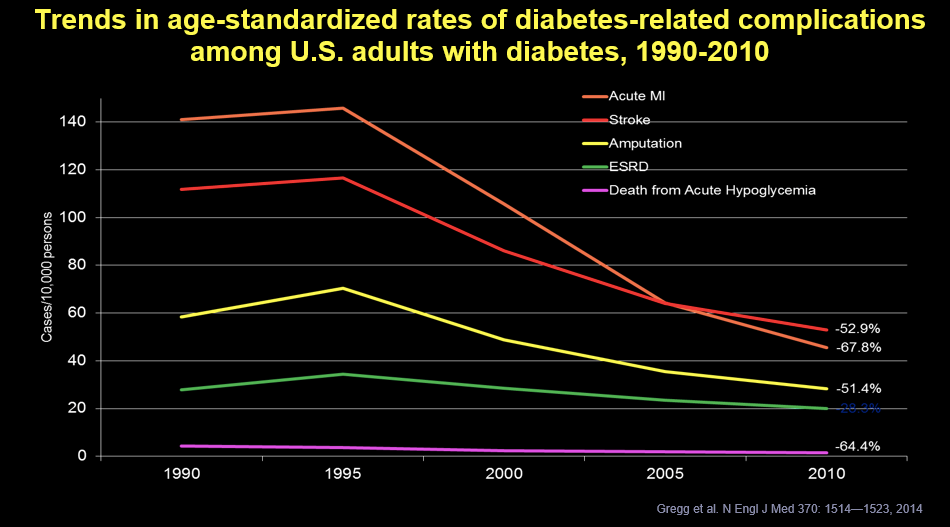
A graph showing trends in age standardized rates of diabetes related complications among u.s. adults with diabetes

Chart provided by the Barbara Davis Center for Diabetes


While diabetes does increase the risk of mortality and increase the risk for heart disease, the good news is that we have seen an overall reduction in heart disease risk among American adults with diabetes over the last several decades.

“First of all, control your diabetes to prevent losing your eyesight, to prevent your kidneys from failing, and also to keep your nerves functioning normally,” Eckel said. “But now, we know that better control of your blood sugar seems to prevent this autoimmunity against the heart from occurring.”
A woman is doing a split with the words if i can just inspire one person
By Sasha Amiscaray April 15, 2026
TL;DR After 15 years of living with type 1 diabetes, Sasha shares her journey from diagnosis and denial to acceptance, advocacy, and a career in healthcare. Through challenges like fear of injections, managing diabetes as an athlete, and navigating school and college, she discovered strength, community, and purpose. Her story shows that while diabetes is difficult, it can also shape identity, open doors, and lead to meaningful connections and opportunities.
A black and white photo of a person with an insulin pump on their stomach
By Dr. Holly O'Donnell April 3, 2026
Type 1 diabetes affects mental health in youth and families. Learn about risks like depression, anxiety, and distress, plus support options and when to seek help.
A young boy in a white sweater is standing next to a cabinet.
By R. Paul Wadwa, MD, Professor of Pediatrics at the BDC April 2, 2026
Type 1 diabetes is often misdiagnosed as flu, UTI, or viral illness. Learn key symptoms, DKA warning signs, and when to ask your doctor for testing to avoid delays.
Author and type 1  diabetic Madeline in a research lab
By Madeline VanOrman March 20, 2026
Follow one patient’s journey with type 1 diabetes from childhood diagnosis to college life, sharing challenges, independence, and finding support along the way.
A cartoon illustration of a white monster with horns waving.
By Cheryl Lebsock March 18, 2026
A parent shares how naming type 1 diabetes “Frank” and reframing it helped protect their child’s identity, improve mental health, and strengthen family support.
Three young type 1 girls with CGMs on their arms.
By CDF Staff March 18, 2026
Donate your Colorado state tax refund to the Children’s Diabetes Foundation. Learn how to use form DR 0104CH to support T1D patients and families.
A group of people are posing for a picture in a living room.
By Stacy Robinson June 14, 2024
With Father’s Day just around the corner, I am thinking about my dad even more than I usually do. He was a special man who lived a remarkable, impactful life right up until the day he passed away at the age of 98, a little over a year and a half ago. He was a decorated World War II veteran, a bookie in Vegas during the Rat Pack era who married the love of his life between rounds of a prize fight, and who later went on to become a successful entrepreneur. Most importantly though, he was a devoted husband, father and grandfather.
A man and a woman are posing for a picture in a parking lot.
By Lindsay Klatt June 14, 2024
Author: Lindsay Klatt Being the dad of two daughters already has its highs and lows; having one of them (who admittedly was already a little feisty) diagnosed with type 1 diabetes makes him a saint. My wonderful dad navigated these challenges with such love and grace. As we approach Father’s Day and as I recently celebrated my 27th Diaversary, I reflect on the things he deserves to be thanked for. There are too many to count and no way to properly express gratitude for the additional struggles type 1 fathers face, but here’s a toast to a few of the things etched on my heart: Cheers to my dad who, when I was diagnosed, had the best balance of acknowledging the sadness of the event and being encouraging for the future. It made me feel seen to see him upset, and to see him determined. He has always maintained that balance I am so grateful for.
T1D patient Dylan Archer on race track.
By Dylan Archer March 8, 2024
Diagnosed with type 1 diabetes at age 8, Dylan refused to give up racing. Read his inspiring journey of resilience, technology, and championship success with T1D.