‘Growing out’ of Type 1: Dexcom and CDF working to find a cure
Graham Daugherty • August 31, 2016
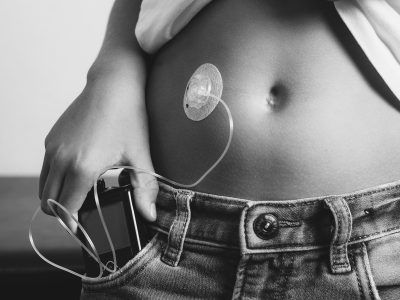
“Mommy, how old will I be when I grow out of diabetes?” This question from my five year old son, Holden, came up last night as I changed his pump sight. I froze for a moment because I wasn’t quite sure how I should answer this. I don’t want to disappoint or scare him with my answer, but I also want him to understand not just what type 1 diabetes (T1D) is, but also the extensive amount of research taking place to find a cure and the great sense of hope we all feel throughout the T1D community about finding a cure soon. So I responded, “Right now we don’t know; all I can tell you is I know for a fact that one day you will remember when, where you were, and how old you were at the exact moment you grew out of diabetes. There are tons of great doctors, researchers and scientists all working together to find a cure.” I continued, “Do you know why mommy works at Dexcom? To be part of this fight and journey to find the cure for you, and to help little boys and girls just like you, and their mommies and daddies like us.”
It’s moments like these that remind me why I – and the companies and organizations like Dexcom and the Children’s Diabetes Foundation – fight and work so hard. We want to change the lives of people with Type 1. We want to find a cure.
This mission is what led me to Dexcom. The Dexcom Continuous Glucose Monitoring (CGM) System allows Holden, my husband and me, his babysitters, teachers, friends, t-ball and soccer coaches, and everyone around him to be more aware of his blood glucose levels at any time of day. We don’t need to be constantly poking his finger or asking how he feels because we can see it on his monitor, our phones or our smartwatches. But I don’t want that peace of mind just for us – I think everyone affected by type 1 should have CGM. I want to help make the lives of those affected by type 1 easier by making blood glucose levels more transparent and easier to access, but most importantly I want to be part of the support team for people new to the world of type 1. When Holden was diagnosed two years ago we couldn’t have made it through the news or the lifestyle transition if it wasn’t for the support of all the doctors, nurses, friends, family members and complete strangers (some living thousands of miles away!) – everyone in this community should have a support team like that.
The Children’s Diabetes Foundation was founded by the parents of a child diagnosed with type 1 and is dedicated to research and support for children with diabetes. Since it was started in 1977, the foundation has raised $100 million. Dexcom is proud to work closely with the foundation and is here to help you and those you love navigate your way through this journey. We don’t want you to be scared, to struggle or feel alone. We are developing the products needed to make Type 1 more manageable. We conduct research and trials. We assist with and fund education and support. All to find a cure.
So if you or someone you love has recently embarked on this journey you should remember this one thing: You aren’t alone in this – we are all here for you and with you… together.

As a mom I can’t stand that his hair is in his face, but this is his all-time favorite photo with Jordan Morris. Jordan is also a person with type 1 diabetes and a professional soccer player. Holden wants to be just like him when he grows up.
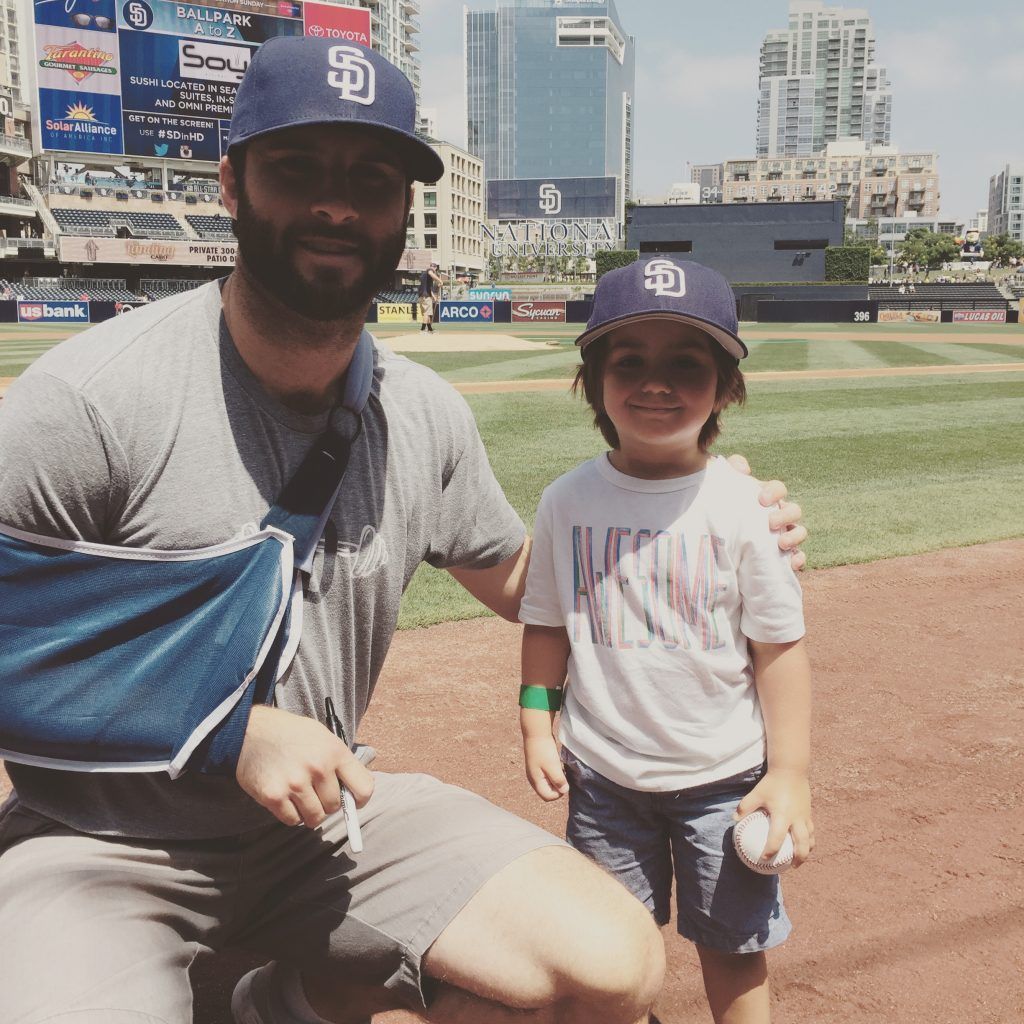
Growing up in San Diego, Holden loves the Padres and everything that’s baseball. Here he is meeting Brandon Morrow from the Padres who also has type 1 diabetes

BRIEF SAFETY STATEMENT
The Dexcom G5 Mobile Continuous Glucose Monitoring System (the “System”) is a glucose monitoring system indicated for detecting trends and tracking patterns in persons (age 2 years and older) with diabetes. CONTRAINDICATIONS Remove the System (sensor, transmitter, and receiver) before Magnetic Resonance Imaging (MRI), Computed Tomography (CT) scan, or high-frequency electrical heat (diathermy) treatment. The System is MR Unsafe. Do not bring any portion of the System into the MR environment. Taking acetaminophen while wearing the sensor may falsely raise your sensor glucose readings. WARNING Do not use the System for treatment decisions. The System does not replace a blood glucose meter. The System is not approved for use in pregnant women, persons on dialysis or critically ill persons. If a sensor breaks and no portion of it is visible above the skin, do not attempt to remove it. Seek professional medical help if you have infection or inflammation. Report broken sensors to Dexcom Technical Support. Sensor placement is not approved for sites other than under the skin of the belly (ages 2 years and older) or upper buttocks (ages 2-17 years). Your smart device’s internal settings override your Dexcom app settings. Accessory devices (like a smart watch) might override your smart device’s alert and notification settings. The Share feature must be turned “On” with an active internet connection to communicate glucose information to a Follower. The Follower must download and install the Dexcom Follow App onto a separate smart device with an active internet connection to receive data. Contact Dexcom Toll Free at 877-339-2664 or www.dexcom.com for detailed indications for use and safety information.