Turning Type 1 Diabetes Waste into Art: A T1D Sister’s Pink Panther Project
Mimi Leahy, Sister of a T1D • May 13, 2026
TL;DR
A Colorado student transforms her little sister’s type 1 diabetes medical waste—like insulin pump supplies and CGM applicators—into a creative Pink Panther art piece. The project raises awareness about the environmental impact of diabetes technology while celebrating resilience and bringing joy to kids living with T1D.
A Family’s Experience Living with Type 1 Diabetes
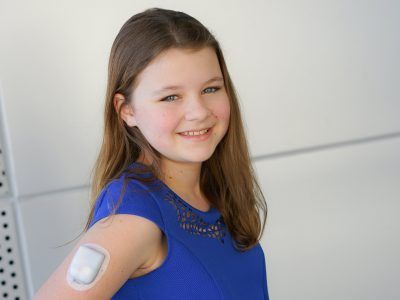
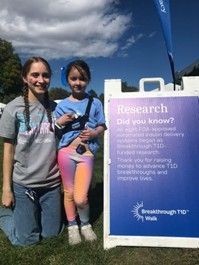
Six years ago, when my little sister was just one year old, she was diagnosed with type 1 diabetes. Initially, my parents started her off on MDI, or Multiple Daily Injections of insulin, with blood sugar monitoring using a Glucometer. However, after gaining more knowledge about the condition and available technologies, my sister switched to using a 10-day Dexcom CGM (continuous glucose monitor) and a 3-day Omnipod insulin pump, which made blood sugar management much more approachable. While these advanced pieces of equipment have been life-changing and continue to get better and better, it has been hard to ignore the amount of associated diabetes-related trash that has added up over the years.
The Environmental Impact of Type 1 Diabetes Supplies
As someone who is passionate about the environment, I decided to look into the issue. The WHO (World Health Organization) defines medical waste as “waste generated by health care activities,” which is often interpreted to only encompass certain biohazards. In the case of Type 1, though, it encapsulates much more, from single-use plastics (e.g. applicators) to expired equipment (Insulin, test strips) to contaminated materials (syringes) and more. None of these materials can be reused, a sad fact for the environment when considering the rate that they’re gone though.
Turning Diabetes Waste into Art: The Pink Panther Project
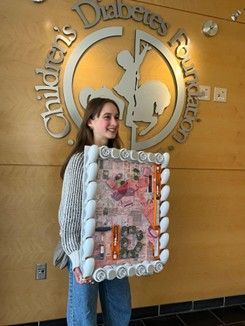
So, after learning more about this issue and witnessing the problem unfold at my own household, I decided to create a recycled art piece that would both bring attention to the issue of sustainability in medical technology while also normalizing T1D for kids like my sister. And that’s where the Pink Panther came in! I knew that—due to the Children’s Diabetes Foundation—the classic character Pink Panther has long acted as an important symbol for the T1D community, especially in educating families new to the condition. Because of this, I thought it would be the perfect tool to get my message across.
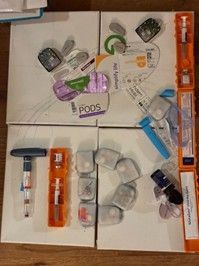
To create the piece, I collected T1D related waste from my sister including Omnipods, Dexcom G6 and G7 applicators, Mobi tubing, Glucagon, Humalog pens, Ketone and Glucose test strips, and various packaging and instructions. Then, I sketched the Pink Panther onto canvas, sorted and cut up the trash, attached it via modge-podge or hot glue, painted it, and glued applicators onto a wooden board for a frame.
Supporting Kids with Type 1 Diabetes through Creativity
I’m very excited to say that after finishing my piece, I got in contact with the Barbara Davis Center for Diabetes and they are soon to be hanging up my art in their pediatric area! My goal for this project is that my art will bring light to the much-overlooked issue of sustainability in medical technology and also bring a little silliness and fun to other kid’s T1D journeys.
About the Author:
Mimi Leahy moved from Pennsylvania to Denver in 2014 and is now a junior at Thomas Jefferson High School. At school, she has enjoyed taking courses like AP biology, making art in ceramics class, and participating in groups like Interact Club, Tea Club, and Sustainability Club, where she hopes to make a positive impact on the environment. In sixth grade, Mimi’s one year-old sister, Neave, was diagnosed with Type 1 Diabetes. Ever since, she has had to learn to care for her sister, and along the way has become very interested in the condition and its improving technologies.

The Power of Screening & Early Detection for Type 1 Diabetes: The Diagnosis I Wish We Could Have Had