Living Well with Type 1 Diabetes: The Power of Everyday Choices
Scott Crossen, Published Author and T1D Since 1971 • April 27, 2016
TL;DR
After living with type 1 diabetes for more than 45 years, Scott Crossen reflects on the choices that shaped his health, mindset, and future. Rather than allowing diabetes to define his life, he committed to learning, exercising, setting ambitious goals, and taking control of his health. His inspiring story demonstrates that while no one chooses to have type 1 diabetes, everyone can choose habits that lead to resilience, adventure, and long-term well-being.
Receiving a Type 1 Diabetes Diagnosis in the 1970s
When diagnosed with type 1 diabetes (T1D) in January 1971, the news was beyond depressing. Suddenly, I had a lifelong condition that required me to take multiple shots every day for the rest of my life. Worse, the day of diagnosis, an irresponsible physician commented, “You’ll have maybe 10 or 15 good years, then after that, who knows?” The diagnosis was devastating, no less so for my parents and friends.
Like most newly diagnosed, I worked hard denying I had the condition. “No one has to know,” I thought in the background of my mind. “I’ll just keep it to myself and maybe before too long someone will find a cure.” Sadly, too long went by too many times.
Building Healthy Habits for Long-Term Diabetes Management
As time passed, I learned about the consequences of not controlling blood sugar, failing to exercise, or managing what I consumed. It became clear that I had to make a choice. Would I learn to control diabetes or would I allow diabetes to destroy my life? I realized that having diabetes was not my choice, but how I lived with diabetes was. Would I work to improve my health with diabetes or live poorly with diabetes and inevitably suffer unpleasant consequences? I determined that life was worth living well and most importantly, that better health was a smart choice – my choice.
The first step began with a commitment to change bad habits I developed over the years, including quitting smoking. That choice alone was one of the best decisions I made. I then learned all I could about living well with diabetes. Information on diabetes was hard to come by before the web, but I found those who had more knowledge and asked many questions.
I affirmed that diabetes would not keep me from living the life I wanted for however long that would be. I made a point of pursuing every goal I would have had without diabetes.
Cycling Thousands of Miles While Living with Type 1 Diabetes
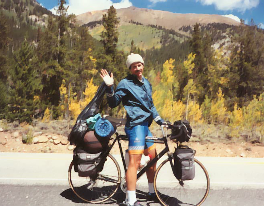
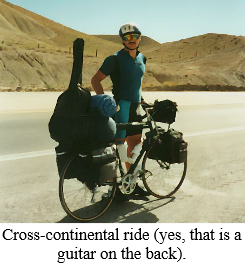
In 1979, I sold my home, resigned from a corporate position and travelled for five months in the South Pacific. Upon returning to the states, I decided to bicycle from Vancouver, BC to Montreal, QE, about 3,100 miles. I invited others to join me, but I could not find anyone who had the time or interest for such a venture. “Do I attempt the trip alone?” I wondered. “Why not,” I affirmed. I had to know I could pedal the distance without assistance and resolved that if I were not successful it would not be from having diabetes. Eight weeks rolled by before pedaling into Montreal.
Two years later, I set-off on a 4,100-mile solo bicycle trip from Vancouver, BC to Halifax, NS. The event’s purpose was to raise money for diabetes research for the University of Colorado, Health Science Center, specifically to find a cure for diabetes. The route had its ups-and-downs (no pun intended) but was finished in seven weeks.
In 2001, I bicycled from Longmont, Colorado to Grand Rapids, Michigan to visit the hospital where I received diagnosis. Along the way, I stopped at a children’s diabetic camp in Nebraska called HotShots and spoke with a group of more than 80 diabetics. At the hospital, too, I spoke with newly diagnosed diabetics to offer encouragement. No matter the venue, my message remained the same; choose to take charge of diabetes, control blood sugar and live the life you want.
No doubt, these trips and others were fraught with difficulties. Many related to diabetes, others due to weather conditions, breakdowns and other unexpected events. I made my share of diabetic mistakes along the many miles but each taught and helped me understand how better to control the disease. The problems had to be overcome – quitting was and is not a solution. There is too much at stake.
Lessons Learned from More Than Four Decades with T1D
In my 46th year of T1D, I reflect on those who have helped me make this path one of improved health including my beautiful wife and co-diabetic friend for the past 32 years. I am writing a book titled, JIGSAW (diabetes, piece by piece) about not only my diabetic experiences, but of those whom I’ve known and the status of a cure. I work as a fitness trainer, teach boxing, self-defense, lead hiking tours, still bicycle and am without any long-term complications specifically related to diabetes.
I state this to assert that a person with diabetes (whether T1 or T2) can choose to live a healthy life. It’s not an easy life, no one ever said it would be with or without diabetes. Still, it can be a better life even healthier than for the majority of people living without diabetes. We have more incentive to learn all we can about living healthfully and to apply what we learn. The only other choice is to give in to the disease and live in poor health. Seems like a no-brainer, doesn’t it?
Note: after finishing this piece, I began reading other postings and noticed that the ‘choices’ theme has been included in additional essays both directly and indirectly. Compliments to the author of, A Diabetic Mom, Twice, for addressing this theme in her submittal. It is critically important for diabetics and guardians to understand and embrace this attitude.



The Power of Screening & Early Detection for Type 1 Diabetes: The Diagnosis I Wish We Could Have Had