The Value of Standing in Line

September 16, 2016
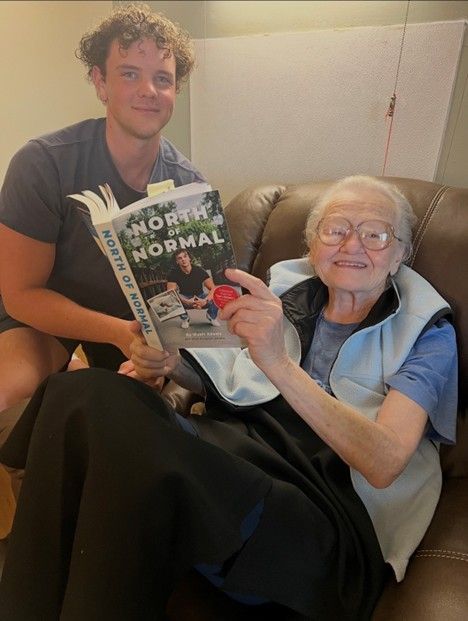
A man and a little girl are standing in front of a building with the caption

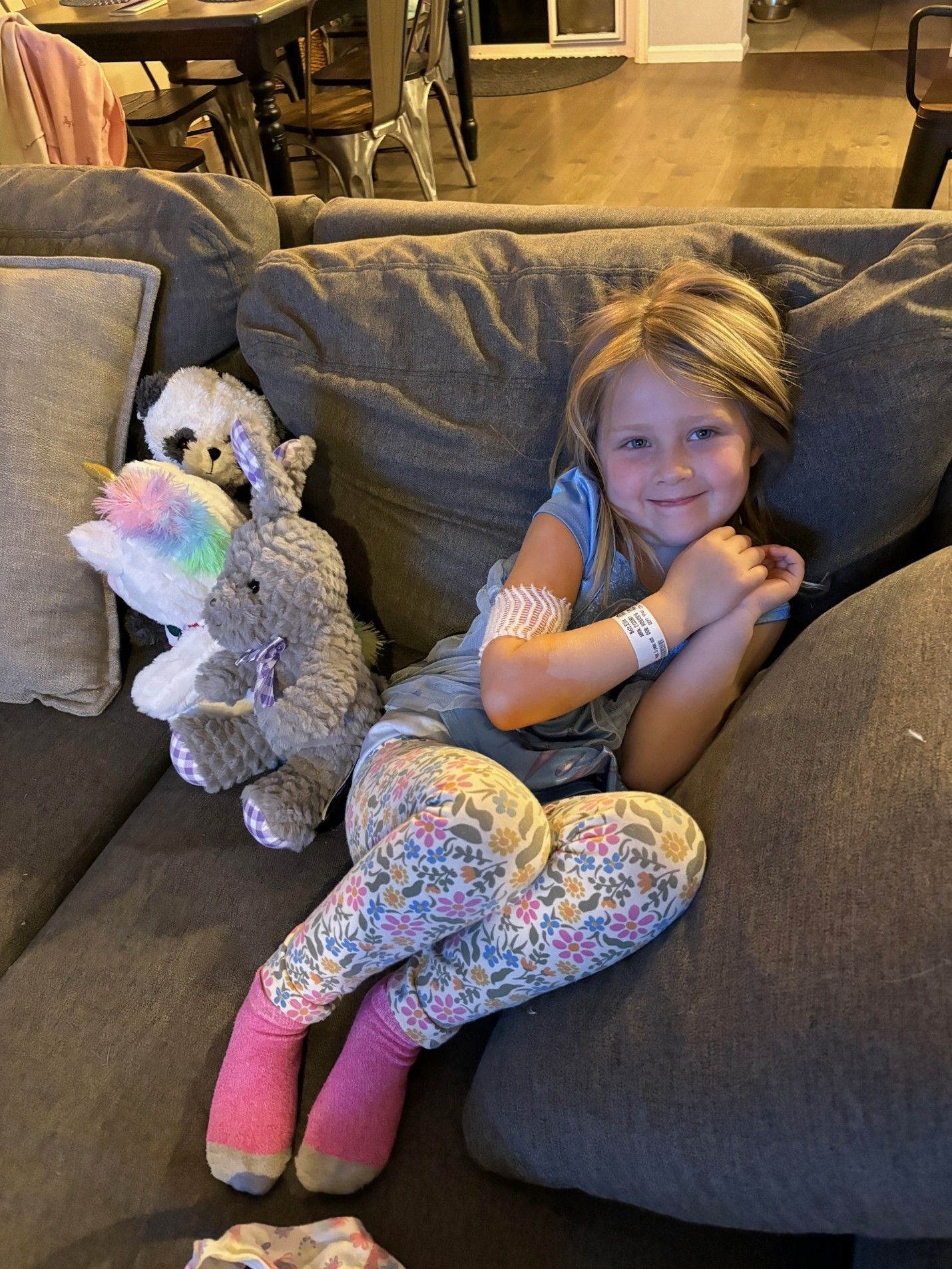
Mckenzie was diagnosed with type 1 diabetes at the age of three, and Celiac disease shortly thereafter. Now, at the age of 7, she has been living with these chronic conditions for the majority of her life, and certainly remembers living with the conditions for far longer than without. For those who may not be familiar with diabetes, there are two basic types. Type 1 diabetes is an autoimmune disorder in which the body’s immune system attacks the pancreas, destroying its ability to produce insulin. A healthy diet and lifestyle can prevent the development of type 2 diabetes, but it will not prevent type 1. To put it simply, drinking a gallon of soda every day for a decade won’t give you type 1 diabetes, and being an Olympic athlete won’t stop you from getting it. It just happens.

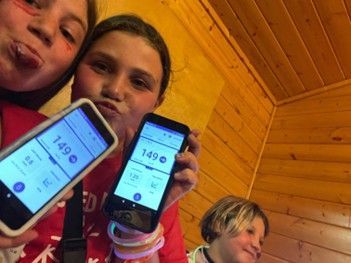
Because her pancreas does not make insulin, Mckenzie’s blood sugar must be checked before every meal, two hours after every meal, when she wakes up, when she goes to bed, in the middle of the night and anytime there is an activity which disrupts her normal schedule. She must then be given insulin or carbohydrates to (hopefully) adjust her blood sugar and keep it in the healthy range. If her blood sugar goes too low she can slip into a coma, if it goes too high for too long her body begins a process called diabetic ketoacidosis which can make her violently ill and land her in the emergency room. It’s the normal way of things for her, but it isn’t easy. She’s the only kid at her elementary school with type 1 diabetes, and the only one of her friends with any type of autoimmune disorder. For that reason, and many others, we were very excited for Mckenzie to attend her first day camp for kids with type 1 diabetes.

The camp was two days, for kids age 6-10, and every kid and counselor there had type 1 diabetes. A YMCA in Colorado Springs donated the space, including use of the pool and the rock climbing wall, and local businesses donated all sorts of food and supplies for the kids. Doctors and nurses donated their time to be on hand in case of emergency, and the atmosphere was very comforting. The effort put forth by the community was amazing, and Mckenzie had the time of her life, even saying at one point, “I’m glad I have diabetes!”

The most memorable moment for me, however, occurred on our way home from the first day of camp. Before we get to that, I should provide some context: Parents dropped their kids off at the YMCA in the morning and did not come back until the afternoon. That’s pretty unusual for parents of kids with type 1, because we’re used to stopping by or speaking with school and/or camps multiple times a day to check blood glucose levels, drop off snacks and help troubleshoot any problems that may arise. At this camp, however, the emphasis was on making the kids as self-sufficient as possible, so parents were encouraged to stay away until the day was done. When we picked Mckenzie up, excited to hear all about camp, she was thrilled to tell us about the swimming and rock climbing and new friends she met that day. It was pretty surprising when she also said her favorite part of the day was standing in the lunch line!

We were speechless, for a moment. The lunch line? With everything that had gone on, how could something like standing in line have been so important? The thing I had neglected to realize was quite simply that it was something she had never been able to do. Mckenzie has had diabetes since before she started school, and for every lunch period since the first day of kindergarten, she has gone down to the nurse’s office just before lunch to check her blood glucose and get the appropriate dose of insulin. Because of that, she is in the nurse’s office while her class lines up, goes to the lunch room and stands in the lunch line. Due to the dietary restrictions of Celiac disease, we always pack her lunch, so she never gets to select what she wants from the options provided at school, and usually gets to the cafeteria after everyone else has their food and is already sitting down to eat. She is rarely able to have the same cupcakes or treats as the other kids at birthday parties, and even if by some miracle the treats are gluten-free, she still has to be pulled aside for a blood sugar check and a dose of insulin.

Her favorite part about diabetes camp was that she got to stand in the lunch line just like everyone else. It had never occurred to me how meaningful that might be to her, because I have never experienced not being able to do it. In fact, for many kids, I’m sure getting to skip the lunch line is something to be grateful for! The difference is the context through which Mckenzie experiences the lunch line. And it’s not true only for people who experience things differently as a result of a health condition, but for people who experience the same event in very different ways as a result of religion, age, gender, ethnicity or any number of variables.

The point is not that my daughter is a stupendous badass (even though she is). The point is that the context through which we experience life shapes that experience, and it is nearly impossible for us to anticipate or judge how someone else should experience their own life. Imagine if you heard my daughter say her favorite part about going to camp was standing in line, and you had not read the previous five paragraphs. “What a weird kid,” you might think to yourself. Now, imagine how many times we do that each day, making snap judgments about things we perceive as awkward or strange, without knowing anything about the context in which they developed.

In closing, it reminds me of a conversation my wife and I recently had with some close friends. We were talking about the factors that make kids who grew up in difficult circumstances successful, and our friend – who just graduated from college and is an awesome father – told us a little about himself. Growing up, he saw lots of alcoholism and violence in his community. He looked at what was happening around him and used it as motivation to make a better life for himself. He told us that a relative of his, who grew up in the same household, looked at those same circumstances as the factors that prevented the development of a better life.

I’m not sure what grand conclusion to draw from all this, but it seems important. The next time I see something I don’t understand, I’ll try to remember that standing in line might be the best part of someone’s weekend.

To read more from the Full-Time Fatherhood Blog, visit https://fulltimefatherhoodblog.wordpress.com/.
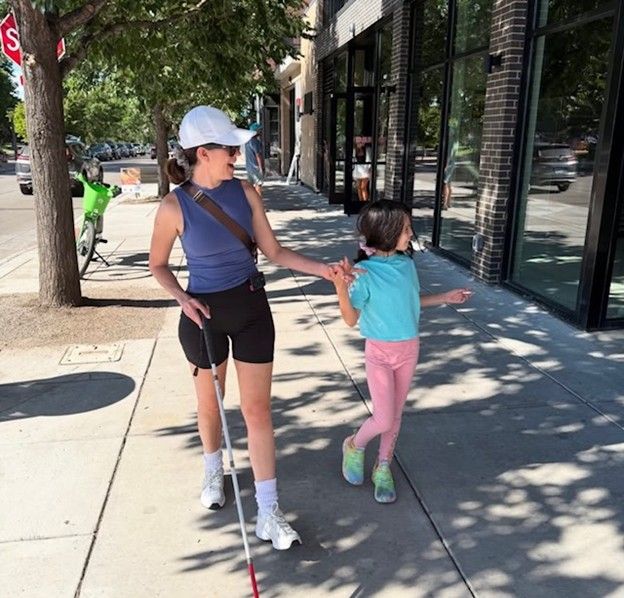
A group of people are posing for a picture in a living room.
June 14, 2024
By: Stacy Robinson With Father’s Day just around the corner, I am thinking about my dad even more than I usually do. He was a special man who lived a remarkable, impactful life right up until the day he passed away at the age of 98, a little over a year and a half ago. He was a decorated World War II veteran, a bookie in Vegas during the Rat Pack era who married the love of his life between rounds of a prize fight, and who later went on to become a successful entrepreneur. Most importantly though, he was a devoted husband, father and grandfather.
A man and a woman are posing for a picture in a parking lot.
June 14, 2024
Author: Lindsay Klatt Being the dad of two daughters already has its highs and lows; having one of them (who admittedly was already a little feisty) diagnosed with type 1 diabetes makes him a saint. My wonderful dad navigated these challenges with such love and grace. As we approach Father’s Day and as I recently celebrated my 27th Diaversary, I reflect on the things he deserves to be thanked for. There are too many to count and no way to properly express gratitude for the additional struggles type 1 fathers face, but here’s a toast to a few of the things etched on my heart: Cheers to my dad who, when I was diagnosed, had the best balance of acknowledging the sadness of the event and being encouraging for the future. It made me feel seen to see him upset, and to see him determined. He has always maintained that balance I am so grateful for.
A person is riding a go kart on a track.
March 8, 2024
Hi, my name is Dylan Archer and I have type 1 diabetes, and I LOVE to race! Type 1 is NOT stopping me! When I was 5 years old, way back in 2013, Dad picked me up from school, and (as usual) we started talking about racing. Dad started racing when he was 16, and we often talked about how much fun it was. Well, this conversation ended a bit differently because Dad asked if I was ready! I got my first go-kart that summer, and in no time, I was hooked! It was a little scary at first, but once I started to go fast I sure had fun! For the first couple of years of racing, I was reaching for the stars. That first trophy made me feel so good, and I knew that I had to get more! But then in 2016, I wasn’t feeling so good, so Mom took me to the doctor. Turns out I had type 1 diabetes. Wow, I wasn’t ready for that news (and neither was my family). It turned my whole world upside down. We had to figure out a way to manage this unexpected, scary thing that was happening to me.
Two girl scouts are standing next to each other in a room filled with boxes.
January 9, 2024
By: Sarah Hathaway On October 10th, 2022 I earned my Life rank in Scouts BSA and began focusing on what was once a faraway goal: Eagle Scout. I had some ideas for my project and I knew I wanted to do something that means a lot to me and benefits as many people as possible; this led me to think about the Children’s Diabetes Foundation. I am an advocate for the organization and I know CDF has made an impact on others just like me so I was hoping I could come up with a plan to help families affected by T1D. I reached out to the Community Engagement Manager, Sydney. I believe that she was really confused and might not have heard about Eagle Projects before so she asked all about what I was looking to do and we talked about different options for projects. I asked her about the newly diagnosed onset bags for people with T1D that I remembered receiving from CDF when I was diagnosed in 2021. This was last June and we were both volunteering at the T1D Strong soccer camp. As camp went on we talked a lot and I offered some more ideas and the plan started coming together. I started to talk to diabetes-related companies to get additional informational materials to put in the bags. I got in contact with Dino from Omnipod and he was very helpful. He sent me a lot of informational packets, games, and even fake Omnipods for new patients to try before spending a lot of money on new technology. Unfortunately, other companies and organizations were not as responsive but there was already a lot of helpful stuff from CDF to go into the bags. I also did a fundraiser before my Eagle Project workday. I set a goal to raise money to put a restaurant gift card in each new onset bag because I remember going to lunch together as a family when I was discharged from the hospital. I knew that families could use that gift card and not have to worry about where to go. As I was fundraising, I found out that the Scouts BSA district person that I was working with, Pat, was associated with KFC. Pat put me in contact with the Regional Manager of KFC and through this contact, KFC donated 100 gift cards for the bags. Finally, on November 11th, 2023, I was able to carry out my project. I had been planning this for months and I was both nervous and excited. Sydney was kind enough to be at the CDF office on a day that she does not normally work and was so supportive. We set up the office to pack the bags and then people started to show up to help. We were able to do the project and even though we were only going to make 100 bags, the group ended up filling about 150 bags in less than an hour! Sydney and I then did a community information talk to over 30 people about our experiences with T1D and answered a lot of questions. It was awesome to look out in the audience at my Scout friends, neighbors, teachers, and family.
A young woman wearing a red shirt that says uchealth is standing in a field.
January 9, 2024
My name is Gracie Lambrecht and I have been living with type 1 diabetes for 12 of the 16 years of my life. Even though I lived for a few years T1D-less, I can’t remember a life without it and while I wish I could say it’s been a walk in the park to deal with, it most definitely has not. As a kid, the burden of pricking fingers, changing pump sites, and treating low blood sugars at midnight was not something that I was really tasked with handling. My parents took the responsibility of my diabetes care so I could be as “normal” of a kid as I could be. As I got older, I began taking more responsibility for my care and now, as a junior in high school, I completely manage my diabetes on my own. As an extremely active high school student, finding time to do anything outside of class, mock trials, and competitive soccer is pretty difficult. Starting off, I want to say that no matter the final exam you have or the big game you might have coming up, your health ALWAYS comes first. Never procrastinate or ignore the needs of your T1D health for any reason and always prioritize taking care of yourself over everything else. While balancing school, sports, and T1D can be stressful at times, taking the right precautions and handling your diabetes care in the moment can make it easily manageable. I want to share, specifically how I manage playing soccer with type 1 diabetes. I have been playing soccer since I was 4 years old. I actually started playing soccer just before I was diagnosed with T1D. I don’t remember much of that time in my life, but my mom knew something was wrong when I would only play for 5 minutes before begging to come off the field for water. After being diagnosed, I stopped playing soccer for a few years in order to better understand how to manage my T1D. After those years, I joined a club soccer team and haven’t stopped playing since. I currently play for the Colorado Rapids North ECNL- Regional League team. On this team, I have the opportunity to play against some of the toughest competition in the nation and the opportunity to be scouted by college soccer coaches. Most games that I play with this team involve at least an hour of travel when we play in Colorado, but we also travel out of the state to Utah, North Carolina, Florida, and other places. A usual week of training consists of: -(3) 1.5 hour outdoor trainings -(2+) 90 minute games -Occasional strength training In order to keep my blood sugars in a target range for playing (I feel most comfortable with my BG between 100-150), I not only make sure that I am eating the right foods in the right amounts, but I also utilize the exercise mode function on my Tandem (T-Slim) insulin pump. “Exercise mode” is a function on my pump that keeps my BG around 150 mg/dl by suspending insulin delivery when my sugars start to drop below 150. To go into further detail, for me, a typical game day looks like this (depending on the time of the game): -3 hours before: I eat a large meal (with a good amount of protein and carbs). My favorite pregame lunch is a Turkey and Cheese sandwich with a small bag of chips and a cup of chocolate milk. -1.5 hours before (30 minutes before warmups): I check my BG via my Dexcom G6 Continuous Glucose Monitor and if: Under 100: treat with 15 grams of sugar (I usually drink a 15g Apple Juice box) and go on Exercise mode for 3 hours. 100-150: Have a 15-20 gram snack (I would usually eat a granola bar) and go on exercise mode for 3 hours. Over 150: Go on exercise mode for 3 hours. -10-20 minutes after the game: I check BG and have a snack/meal with protein to replenish nutrients (I like to drink a Nesquik Chocolate milk right after the game to hold me over until I can get a meal). This plan is also very similar to how I prepare for a normal weeknight training session (minus eating a large meal 3 hours before).
A picture of a mountain with a white circle in the middle.
July 17, 2023
Eli Lilly has a ripple effect on making insulin more cost effective for T1Ds. Every day patients make critical decisions in rationing their insulin and we are hopeful this will help stop families from having to make such sacrifices. Thank you to Eli Lilly, Novo Nordisk, Sanofi! Watch the interview with Dr. Satish Garg: Diabetes doctor says it’s “high time” insulin prices are lowered Read more here:
A picture of a mountain with a white circle in the middle.
July 17, 2023
Congratulations Dr. Satish Garg for being named the winner of the ATTD Lilly 2023 Insulin Centennial Award. This prestigious award is given to doctors who have made significant contributions to diabetes treatment. Dr. Garg has been an international leader for insulin therapy in both type 1 and type 2 diabetes, with expertise in clinical trials and methods of insulin delivery. Dr. Garg joined the BDC in 1988 and founded the adult clinic as senior faculty in 1992. He has also served as the director of the ATDC Keystone Diabetes conference since 2005
A person is being tested for diabetes by a doctor.
November 2, 2022
It’s important to know that Type 1 and Type 2 diabetes are extremely different diseases . While they both deal with insulin and the body, their causes and treatments are very different.nn Type 1 diabetics CANNOT make their own insulin. Type 1 is a genetic, auto-immune disease. It is thought that type 1 is present in the body’s genetic code and then it presents at various times. Basically meaning, it’s lying there in wait and decides to show itself at various ages. The majority of type 1 patients get diagnosed in their childhood and when they are adolescents, however it can happen later in life as an adult. The body begins attacking its own pancreatic cells, specifically the islet cells that make insulin in our bodies. It attacks these cells so aggressively that the patient stops being able to make any insulin whatsoever. Insulin processes the carbohydrates we eat and feeds our cells. If we don’t feed our cells, we have too much sugar in our system which wreaks havoc on everything from your kidneys to your eyes to the mood you are in. You cannot live (for long) without insulin. Only 100 years ago, a person diagnosed with type 1 diabetes would be lucky to stay alive for two more years and that life would be oneof misery and starvation. This auto-immune attack on the pancreas cannot be prevented. If it’s in the genetic cards for you, you can’t stop it. Type 1 cannot be caused by an unhealthy diet, eating too much sugar, obesity or lifestyle issues. It cannot be cured (yet!) and patients will live with the disease for the rest of their lives. Thankfully, we now have treatments and technology to manage type 1 diabetes but that is what it is-a lifelong management. Patients take synthetic insulin via injections or by using an insulin pump and do all of the work and insulin calculations a normal pancreas does naturally in the body. They also constantly monitor their blood sugar numbers, trying to stay within a normal range. But when we say we manage it, we mean it is at the top of our minds every minute of every day. Tons of different things affect blood sugar. Food is the biggest one, but blood sugar is also affected by exercise, illness, sleep, co-occurring conditions, menstruation, stress, medication, altitude, weather… and the list goes on. Managing all of these things and injecting insulin for the various situations is a full time, exhausting job. And even the type 1 patients who have a lifetime of good control will feel the affects of the disease on their body and through various complications. Only 5% of the total diabetes population has type 1 diabetes, although the number of newly diagnosed type 1 patients is increasing each year.
A picture of a mountain with a white circle in the middle.
October 9, 2022
Diane Keaton Honored at the 36th Carousel of Hope Ball Event Featured Emcee Howie Mandel and Performers John Legend, Andy Grammer, and Deborah Cox